
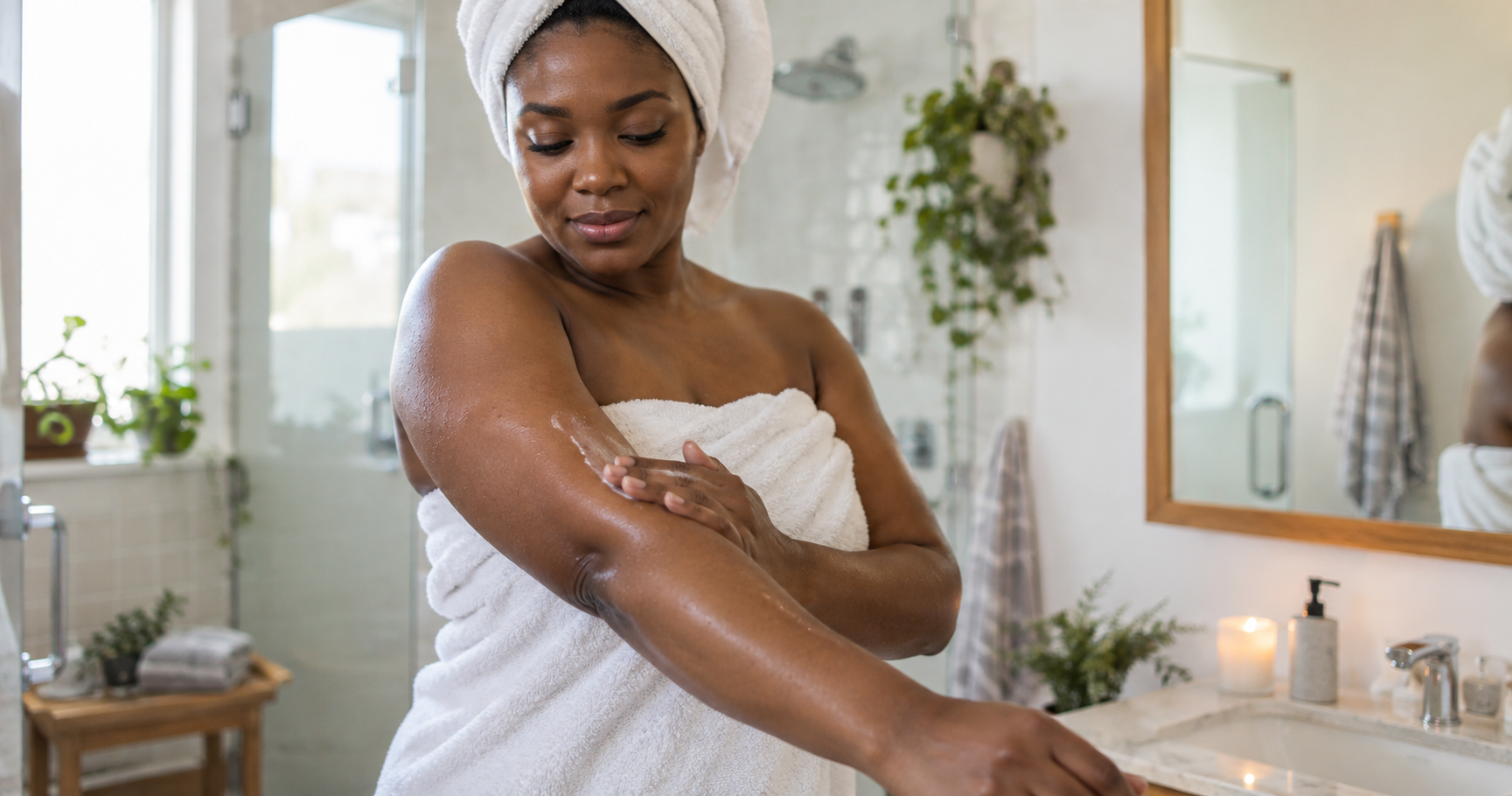
Most eczema advice focuses on which products to use. Just as important, and talked about far less, is the order you use them in. Eczema comes down to a damaged skin barrier. The sequence of your routine can genuinely affect how well it works.
Start With the Soak and Seal Method
Dermatologists commonly recommend a routine called “soak and seal”:
- Bathe in lukewarm water, not hot, for 5 to 10 minutes. Hot water strips away natural oils and can make eczema worse.
- Use a gentle, fragrance-free cleanser. Don’t scrub.
- Pat your skin dry, don’t rub. Leave it slightly damp instead of completely dry.
Treat First, Then Moisturize
Once you’re out of the bath or shower, here’s the order that matters:
- Apply any prescribed medication to affected areas first, while your skin is still a little damp.
- Within about three minutes, moisturize the rest of your body. Use a generous layer. This is what locks moisture into skin that’s still slightly wet from bathing.
The National Eczema Association is specific about one detail here: moisturize the unaffected skin, not the spot where you just applied medication. That keeps your treatment concentrated where it’s needed, instead of diluted.
Good news here: this doesn’t mean you have to choose between the two. You can absolutely still use an over-the-counter moisturizer, like one with colloidal oatmeal, alongside your prescription treatment. Most dermatologists actually encourage it. The guidance above is really just about timing and placement on a given day: treatment goes on the affected spot, moisturizer goes everywhere else, so the two aren’t sitting on top of each other and diluting one another in the exact same spot at the same time.
Why Not All OTC Eczema Creams Are Created Equal
Reach for a moisturizer with colloidal oatmeal in it if you can. It’s a common active ingredient in over-the-counter eczema creams for good reason: it’s a skin protectant that calms and soothes irritated skin.
Beyond that, look at what else is in the formula. Hyaluronic acid is worth knowing about specifically: it can hold many times its own weight in water, which makes it especially effective at helping skin that’s already struggling to retain moisture on its own. Naturally sourced versions of hyaluronic acid, rather than synthetic ones, are increasingly used in formulations for exactly this reason. Dermasolve’s Eczema Cream, which pairs colloidal oatmeal with Ovasome Technology’s naturally sourced hyaluronic acid, is one example built around that combination.
What If Both Need to Go on the Same Spot?
Sometimes a flare covers enough area that treatment and moisturizer need to overlap. The honest answer: the research on strict ordering is thin. Some doctors say the order doesn’t matter, as long as you wait about 15 minutes between the two.
That said, the more common advice is to apply medication first, then moisturizer on top. That way, the treatment touches your skin directly before anything else gets layered on. Think of the moisturizer as sealing the treatment in, not competing with it.
Why the “Within Three Minutes” Window Matters
This isn’t a random number. Right after bathing, your skin holds extra water. That water starts evaporating almost right away. Moisturizing quickly traps it against your skin instead of losing it to the air. That’s exactly what a weak barrier needs help with.
Wet Wrap Therapy for Bad Flares
For a more intense flare, some dermatologists recommend wet wrap therapy. You apply moisturizer or medication, then wrap the area in a damp layer of fabric, with a dry layer on top. This can boost comfort and how well a treatment absorbs.
One tradeoff worth knowing: wrapping increases how much steroid gets absorbed into your body, not just your skin. That raises the stakes on getting the strength and duration right. Wet wrap therapy works best with a dermatologist’s guidance, especially with a steroid involved. It’s not something to start on your own.
The Most Common Mistake: Stopping Too Early
Once a flare’s redness clears, it’s tempting to stop and go back to normal. This is the most common misstep. Visible improvement doesn’t mean the skin barrier has fully repaired itself underneath. Most guidance says to keep treating for a couple of days after the skin looks clear. Stopping the moment it clears is a common reason flares come right back.
When to See a Dermatologist
- You’re not sure whether to apply medication or moisturizer first for your situation
- A flare is severe enough that you’re considering wet wrap therapy
- Your routine isn’t improving things after a few weeks of consistent use
- You keep having flares come back shortly after things clear up
Getting the order right won’t fix eczema on its own. But it makes sure the products you’re already using are actually doing their job.
Mike Marenick is the founder of HealFast Skincare and holds the patent for his invention, Ovasome Technology, used in skincare formulations. He began developing skincare products after watching his mother manage psoriasis for decades, and has spent over twenty years formulating treatments for chronic skin conditions. His work has been featured on Home Shopping Network, in two national infomercials, and in more than 300 publications including Vogue, Newsweek, and Allure. He is not a medical doctor — always consult a dermatologist for diagnosis and treatment of skin conditions.
As an Amazon Associate, Itch and Flare earns from qualifying purchases.